The solution
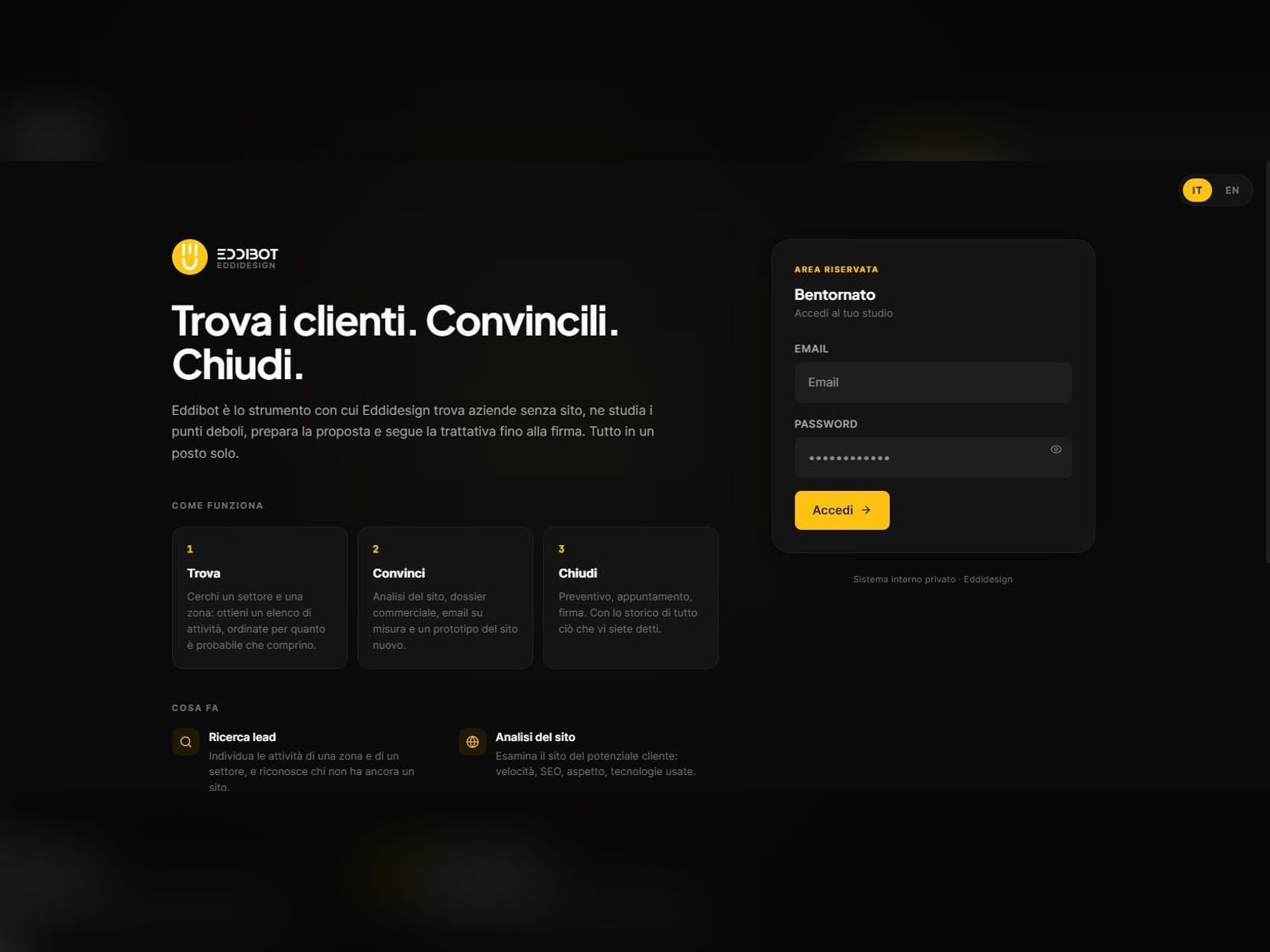
Eddibot does three things, in the order they actually happen: it finds, it convinces, it closes.
Finds. You give it a sector and an area, say the florists between Soncino and Orzinuovi, and it goes and fetches the businesses that are there. Then it ranks them: at the top go the ones you can actually reach that do not have a website yet, the only ones worth picking up the phone for. Overnight it checks again and adds the new ones, so the list is already up to date in the morning.
Convinces. Before writing to anyone, it opens the site they have now and loads it the way a customer would. It measures how long that takes, looks at whether it reads well on a phone, whether Google finds it, what it was built with. Out comes a sheet listing that site's real problems, and from there the first email talks about them instead of about us.
Closes. The quote is assembled from the price list and comes out as a PDF, emails and appointments stay attached to the client's record, hours are logged while the work happens. When a deal that stalled two months ago comes back, everything that was said is written down.
Underneath sits the software itself: one archive instead of ten files, people signing in each with their own permissions, and the repetitive things happening on their own while nobody is watching. It opens in any browser and installs on a phone like an app, because half of this work happens away from the office.
It is also why bespoke software is one of the services we offer today: before proposing it to anyone we built it for ourselves, and we use it every day.
A note on the screenshots below: they come from the test installation, the one the software is tried on before any change goes into use. That is why the counters are at zero and the company names are obscured. The real data sits on the installation we work with, which we do not show.